
REVIEW · NORWAY
Oslo Nature Walks: Island Hopping Tour
Oslo’s best escape is just a ferry ride away. I like the mix of ferry travel and walking, which lets you see the fjord from the water before exploring it on foot. I also like the range of sights, from the nearly 1,000-year-old abbey ruins on Hovedøya to the flower-filled cabin paths of Lindøya. The main drawback is the amount of walking: expect about 7 kilometers over gravel, dirt, and stone paths, with conditions that can be slippery in winter.
This $69 tour gives you a guide, public ferry tickets, and a carefully planned route through islands that are easy to miss if you stay in central Oslo. You will hear stories about Viking-era Norway, military defenses, old airport buildings, and modern island life. The experience is best for visitors who want nature and local context, not just a boat ride.
At a glance: what makes this tour worth considering
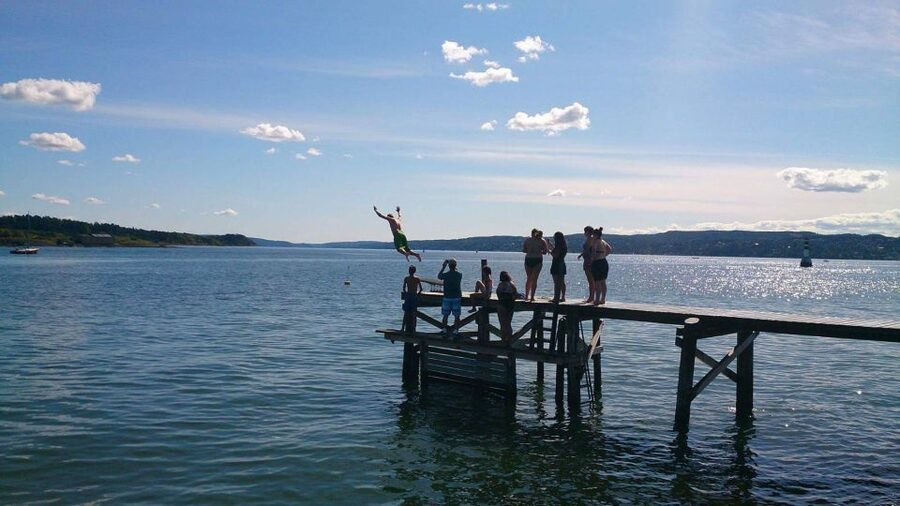
- Three very different islands in warmer months: Hovedøya brings abbey ruins and beaches, Gressholmen adds military and aviation history, and Lindøya shows Oslo’s summer-cabin culture.
- A public-ferry adventure: The boats are part of Oslo’s everyday transport system, so the trip feels like a local outing rather than a sealed-off sightseeing cruise.
- About 7 kilometers on foot: You will use gravel, dirt paths, stones, forest trails, and island roads, so sturdy shoes matter.
- Season changes the experience: From April through August, the route lasts 4 to 4.5 hours and visits three islands. From September through March, it lasts about 3.5 hours and visits two.
- Strong guiding is central to the experience: Guides such as Shaf, Patrick, Giovanni, Neil, Carolina, Jon, and Laura have been praised for clear storytelling, humor, care with the group, and useful Oslo advice.
- Winter extras are practical: From October through March, the guide provides warm drinks, and on icy days crampons may be available.
Starting at Rådhusbrygge 4
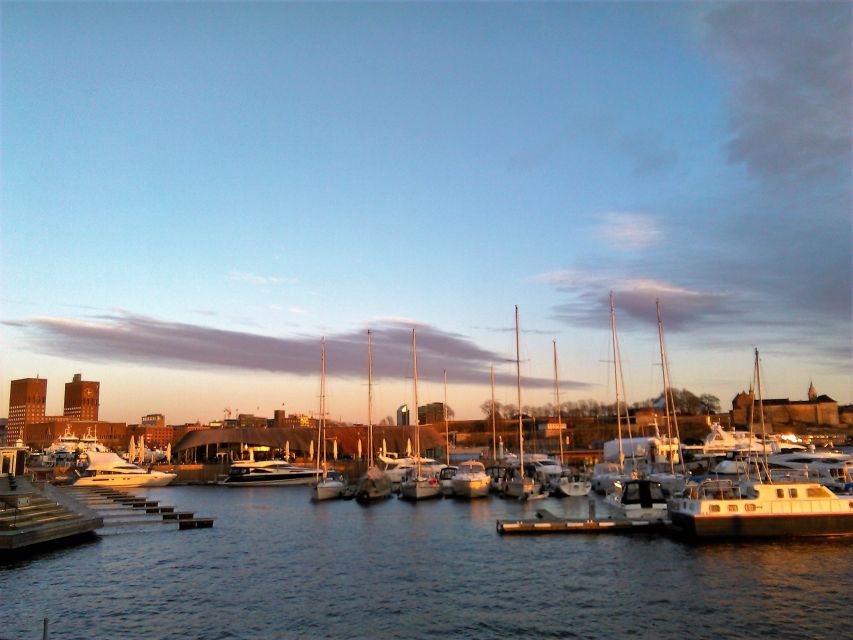
The tour begins near the public-ferry departure area at Rådhusbrygge 4, close to Platform E and the Fisketorget restaurant. Arrive about 10 minutes early. This is a useful location for first-time visitors because it sits by the harbor, with the city center close at hand.
Your first ferry ride takes roughly 10 minutes. That short crossing does important work. You leave the streets and buildings behind, watch Oslo open up from the water, and begin to understand how closely the city is tied to its fjord.
This is not a private cruise with a fixed commentary system. You ride public ferries, which means the experience is tied to normal transport schedules and shared with other passengers. That gives the outing a more everyday Norwegian feel, though it also means you should be ready for ferry timing and changing weather.
More Island Hopping Tours in the world:
- Santorini: Volcanic Islands Cruise with Hot Springs Visit
★ 4.4 · 10,869 reviews - Stockholm: City Archipelago Sightseeing Cruise with Guide
★ 4.3 · 10,798 reviews - Full-Day Dubrovnik Elaphite Islands Cruise with Lunch and Drinks
★ 5.0 · 8,823 reviews
Hovedøya: abbey ruins, sheep pastures, and sea views
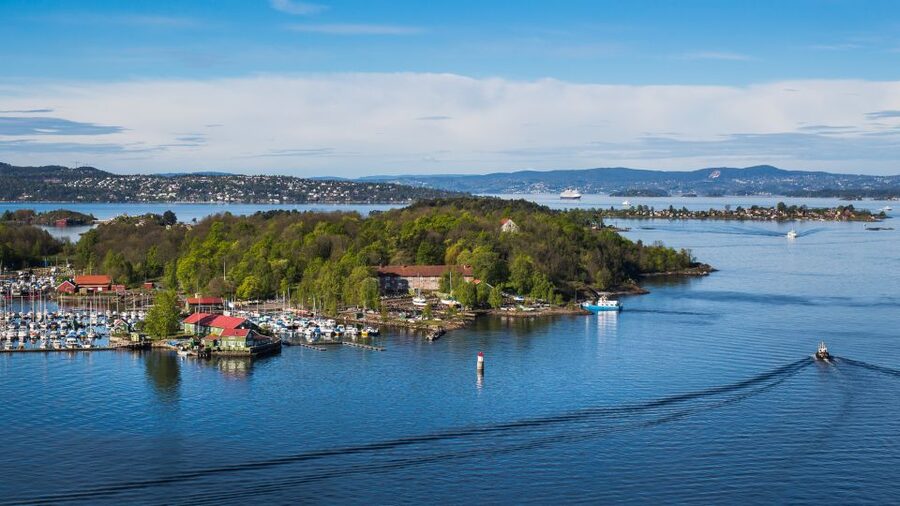
Hovedøya is the tour’s strongest history stop. Its name means Main Island, and it holds the ruins of a Cistercian abbey founded nearly 1,000 years ago by English monks. The abbey became part of the Christian transformation of Norway after the Viking era, so the site gives you a clear way to connect Oslo’s medieval past with the country’s wider religious and political changes.
You walk among preserved chambers and stone walls while the guide explains how the monks arrived and how the abbey became a powerful institution. The remains are not a grand, complete building. That is part of their appeal. You can see the shape of former rooms and imagine the working life of a community that once stood well outside the young city.
From the ruins, the route continues through sheep pastures and birch woodland. The change in setting is one of the tour’s pleasures. Within a short walk, you move from medieval stonework to open grass, trees, rocky shore, and wide views over the water.
Hovedøya also carries military traces. Near the coast, you will see old ramparts and cannons linked to the Napoleonic Wars in the 19th century. Beaches and lookout points provide places to pause, take photographs, and enjoy the coastline before returning to the pier.
The island section lasts about an hour. That is enough for a useful introduction, but not enough for a slow, self-directed exploration of every path. If you want long stretches of quiet beach time, this guided schedule may feel brisk.
Gressholmen: nature reserve and traces of Oslo’s first airport
The next ferry ride takes about 10 minutes and brings you to Gressholmen. The island has a different character from Hovedøya. Here, the natural setting is paired with reminders of transport and military history.
Gressholmen is a nature reserve, so you get another taste of the fjord’s quieter side. The walk includes photo stops and local explanation, with the guide filling in the story behind the buildings and sites connected to the island’s military past.
One of the more unusual details is the remains of Oslo’s first airport. This gives the island an extra layer of interest. You are not only walking through woodland and along the shore. You are also seeing how a small island once played a role in the city’s early aviation story.
The stop is planned for about an hour. As with Hovedøya, the value is in the combination of place and explanation. You could reach Gressholmen by ferry on your own, but you would miss much of the context that makes scattered ruins and old structures meaningful.
Lindøya: flowers, cabins, and the Oslo summer tradition
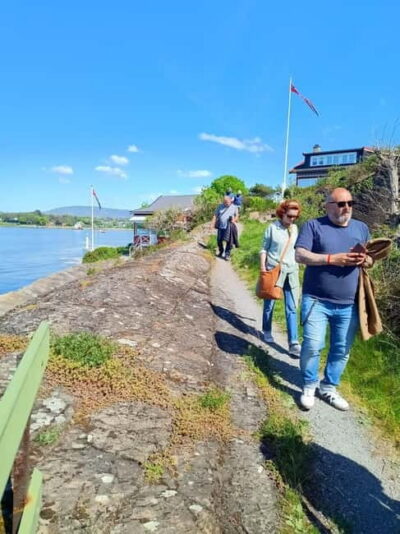
The final island in the April through August route is Lindøya, one of Oslo’s cabin islands. The mood changes again. Instead of abbey stones and military remains, you walk along paths lined with small wooden houses, gardens, and bright flowers.
These cabins show a side of Norwegian life that can be easy to miss in the city center. They are holiday retreats, but the setting is not a remote mountain village. The homes sit within Oslo’s fjord, close to the capital yet surrounded by water, trees, and open sky.
The route winds through village paths and up to viewpoints. You get time to appreciate the small details: traditional wooden houses, carefully tended gardens, and the contrast between domestic holiday life and the broad fjord around it.
Lindøya is scheduled for about 90 minutes, making it the longest walking section. That extra time helps the island feel less like a quick photo stop and more like a place with its own rhythm. It is also the natural point for a picnic.
From April through September, you should bring your own lunch, water, and perhaps swimwear and a towel if you want to make use of the beaches. A kiosk may be open for snacks or ice cream, depending on weather and opening hours, but you should not rely on it as your main food source.
Same water, a different set of islands:
- Blue cave, Mamma Mia and Hvar, 5 islands speedboat tour
★ 5.0 · 7,150 reviews - Split/Trogir: Blue Cave, Mamma Mia, Hvar and 5 Island Tour
★ 4.6 · 6,320 reviews - Dubrovnik: Elaphiti Islands Full-Day Cruise with Lunch
★ 5.0 · 5,938 reviews - Blue Lagoon & 3 Islands Cruise with Lunch from Split
★ 4.5 · 5,756 reviews
The return ferry gives you a fine Oslo welcome
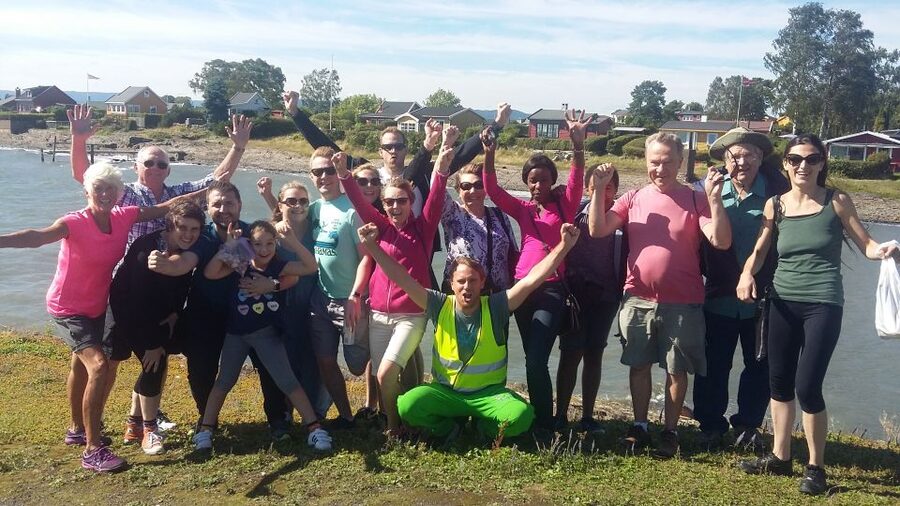
After the island walks, you take the ferry back to Rådhusbrygge 4. The crossing takes about 10 minutes, and the city arrives gradually across the water.
You will see some of Oslo’s best-known waterfront sights, including Akershus Fortress, City Hall, and the renewed harbor area around Aker Brygge. This return is more than simple transport. It gives you a useful visual contrast: quiet islands on one side of the day, Oslo’s civic buildings, port, and urban waterfront on the other.
For many visitors, this is the moment when the tour’s design makes sense. You have spent several hours outside the city, then returned by water with a fresh view of the capital.
How much walking should you expect?
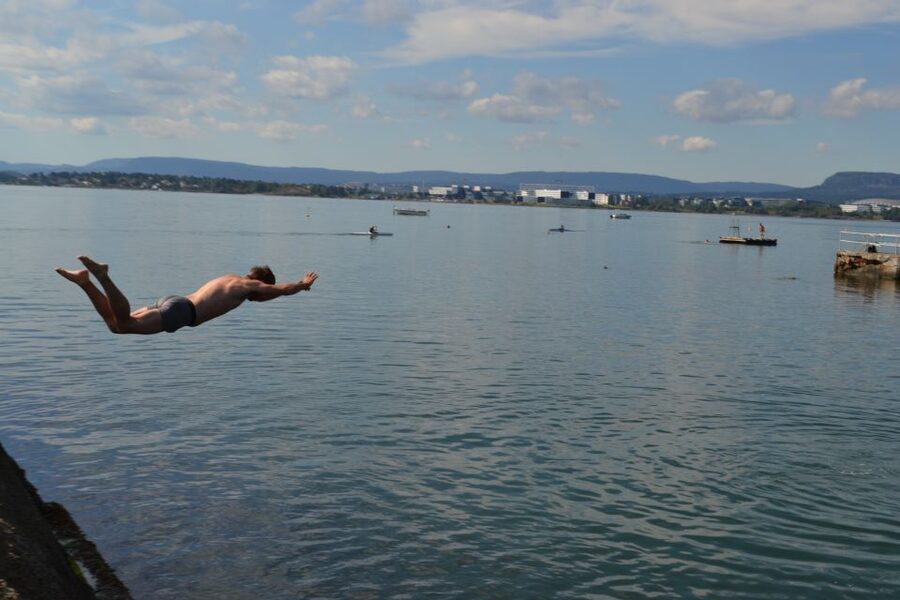
The stated walking distance is about 7 kilometers, or roughly 10,000 steps. The paths include gravel, dirt, and stones, so comfortable shoes are not enough if they lack support. Good trail shoes are the safer choice.
You do not need technical hiking equipment, but you should be ready for uneven ground and changing conditions. In winter, cold and ice can make the route harder. One guide provided crampons on a particularly slippery day, but you should still dress for the season rather than assume equipment will always be available.
The pace appears to include rest stops and time for photographs. A guest with a knee injury was accommodated without disrupting the outing, which suggests that guides pay attention to the group. Still, this is not a flat harbor stroll. The tour is not suitable for wheelchair users or children under nine.
Pack a small backpack with:
- Sturdy walking shoes
- Water
- A packed lunch from April through September
- Swimwear and a towel if useful to you
- Rain gear
- Warm layers in colder months
Rain gear is not included. Oslo’s weather can change quickly around the water, and a waterproof outer layer will make a wet day far more pleasant.
Winter changes the route, but not the appeal

From September through March, the tour visits two islands and lasts about 3.5 hours. The shorter format is sensible because daylight, temperatures, and trail conditions can make a full three-island route less practical.
The winter route still includes ferry travel, island walking, views, and historical storytelling. Hovedøya and Lindøya appear regularly in the colder-season experience, though the exact two-island combination should be checked when you book.
Cold weather is a real factor. One January outing was described as freezing but clear, while another was enjoyable in rain. That is the tradeoff: winter can give the islands a quiet, almost magical feel, but you need proper clothing and shoes.
Warm drinks are provided from October through March. Coffee, tea, hot chocolate, and gingerbread have been used as a welcome break during cold walks. This is a small touch, but it matters when you are outdoors for several hours.
Guides have also helped groups manage icy paths, kept an eye on anyone falling behind, and offered practical recommendations for food and further walks in Oslo. Shaf, Giovanni, Patrick, Carolina, Neil, Jon, Laura, and several other guides have been singled out for friendly energy, useful local advice, humor, and strong historical storytelling.
What $69 gets you, and where the value lies
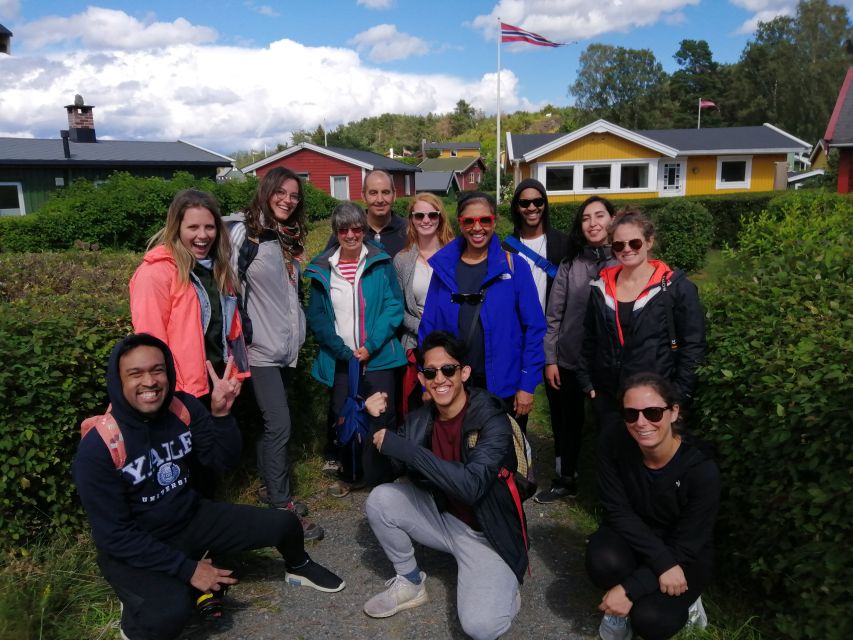
At $69, this is not the cheapest way to ride Oslo’s ferries. You can buy public transport separately and visit some islands independently. The extra cost pays for planning, ferry coordination, a walking route, and interpretation.
That last part is the key. The islands are easy to reach, but their stories are not always easy to read from the scenery. Without a guide, the abbey ruins are simply old stone walls, the military remains may be easy to overlook, and the airport traces could pass without notice.
The tour also saves you from working out which ferry to take next and how to connect the island stops within a four-hour window. For a first visit, that structure has real value.
The price is strongest in the warmer months, when you see three islands and spend more time outside. In winter, the route is shorter and covers two islands, though the warm drinks and seasonal atmosphere help balance that difference.
Who will enjoy this island tour most?
You should consider booking if you want:
- A break from Oslo’s urban sights
- Light hiking rather than a bus-based excursion
- Local history tied to real places
- Public transport and everyday city life
- Fjord views, beaches, woodland, and small cabins in one outing
- A guide who can suggest more things to do in Oslo
It is a good choice for couples, friends, solo visitors, and families with children aged nine or older who can manage the walking. It also works well early in a city stay, since guides may offer useful tips for later walks, restaurants, and neighborhoods.
You may prefer another activity if you want a relaxed cruise with minimal walking, guaranteed indoor shelter, or a private vehicle. The ferry rides are short, and most of the experience happens outdoors.
Simple logistics that make the day easier
Meet near Platform E at Rådhusbrygge 4, next to Fisketorget, and arrive 10 minutes early. The tour is in English and includes public-ferry tickets.
The activity allows cancellation up to 24 hours before departure for a full refund, and you can reserve now and pay later. Check the departure time and seasonal route before committing, especially if visiting from September through March.
Bring food in the warmer months. A kiosk may be open, but it is not guaranteed. From October through March, warm drinks are included, though you should still carry water and perhaps a small snack.
Should you book Oslo Nature Walks: Island Hopping Tour?
I would book this if you want to see a less polished, more lived-in side of Oslo. The combination of ferries, forest paths, old stonework, military remains, beaches, and cabin gardens gives you a much fuller sense of the fjord than a short sightseeing cruise.
The best reason to go is the guide. You can reach the islands yourself, but a good guide connects the ruins, paths, and buildings into a story. The experience has earned a 4.8 rating from 2,713 ratings, and the praise repeatedly centers on guide quality, clear history, friendly care, and beautiful scenery.
Choose the warmer months for the full three-island route and more time outside. Choose winter if you like quiet trails, cold air, warm drinks, and a more rugged outing. Just bring proper shoes, food when required, and realistic expectations about the walking.
FAQ
How long does the island-hopping tour last?
From April through August, it lasts about 4 to 4.5 hours. From September through March, it lasts about 3.5 hours.
How many islands does the tour visit?
The warmer-season route visits three islands: Hovedøya, Gressholmen, and Lindøya. The colder-season route visits two islands.
Where does the tour start?
It starts at Rådhusbrygge 4, near public-ferry Platform E and the Fisketorget restaurant.
How early should I arrive?
You should arrive 10 minutes before the tour begins.
Is food included?
Food is not included. You are encouraged to bring your own lunch from April through September. A kiosk may be open, depending on weather and opening hours.
Are warm drinks included?
Warm drinks are provided from October through March. Coffee, tea, or hot chocolate may be available, along with gingerbread.
How much walking is involved?
You will walk approximately 7 kilometers, or about 10,000 steps, on gravel, dirt paths, and stones.
What should I wear?
Wear comfortable, sturdy trail shoes. Bring rain gear and dress for the season. Winter conditions can be cold and icy.
Is the tour suitable for children and wheelchair users?
The tour is not suitable for children under nine or for wheelchair users.
Just added around the world
- Zakynthos Premium 4×4 Island Experience★ 4.4 · 7 reviews
- Zanzibar: Luxury Speedboat Island Hopping Tour★ 5.0 · 2 reviews
- Zadar:Speedboat Tour with Snorkeling on 3 islands★ 5.0 · 3 reviews
- Zadar: Three Islands Private Boat Tour★ 5.0 · 80 reviews
- Zadar: Island-Hopping, Swimming & Snorkeling SpeedBoat Tour★ 5.0 · 33 reviews
- Zadar: Private Sunset Sailing Tour in Zadar Archipelago★ 5.0 · 26 reviews
- ★ Zadar: SpeedBoat Tour to 3 Islands – Swimming & Snorkeling★ 4.8 · 40 reviews
- Zadar: Island-Hopping Blue Lagoon Boat Tour with Drink★ 4.9 · 148 reviews
Norway Island Hopping, compared.
Fjords and Sommarøy Islands Tour with Salmon Picnic
Read our review →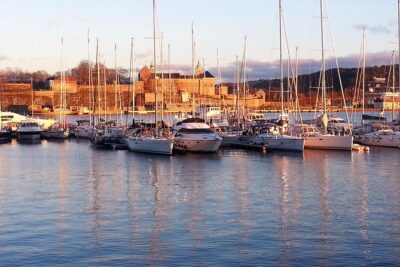
Kristiansand: Express Archipelago Tour by RIB Speedboat
Read our review →
Browse the lists this tour appears in