

REVIEW · SWEDEN
Culinary Kayaking Adventure – Saint Anna Archipelago of Sweden
Swedish islands meet campfire cooking. This four-day Saint Anna Archipelago trip combines steady sea kayaking, wild foraging, and thoughtful outdoor meals in a way that feels far more personal than a standard sightseeing tour. I especially like the small maximum group of eight and the chance to learn from guide Tomas or Thomas and chef Helena, rather than simply being transported from one view to the next. The main consideration is that you need to be comfortable with several hours of paddling, changing weather, and simple island camping.
I also like the base-camp approach, which lets you explore nearby islands without packing up every few hours. The food is a genuine highlight: homemade jam, pickles, wild herbs, berries, fish, and ambitious campfire dishes are all part of the experience. Still, this is not a soft adventure with hotel comforts. Beginners are welcome, but you should have a real interest in cooking and be ready to help with camp and meals.
Key points to know before booking
- The food is the heart of the trip: Chef Helena turns foraged plants and local ingredients into impressive meals over a campfire.
- You paddle through three distinct island zones: forested inner islands, smaller middle islands, and the exposed outer archipelago.
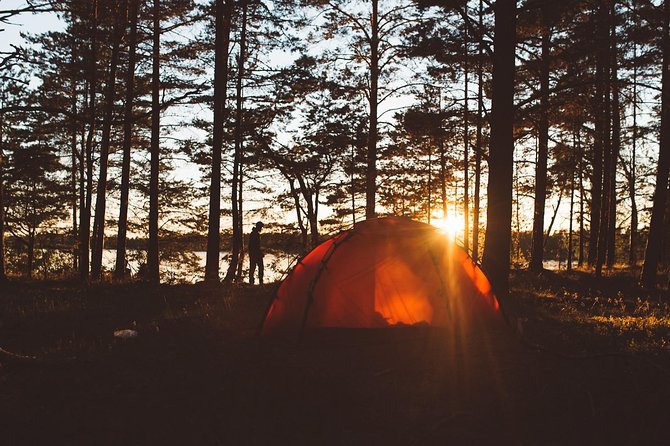
- You camp on uninhabited islands: Tents, sleeping pads, and outdoor cooking create a comfortable but hands-on wilderness stay.
- The group is capped at eight people: That keeps instruction personal and makes shared cooking more manageable.
- Kayaking beginners can join: You do not need advanced paddling skills, but you should be ready for a strenuous outing on Day 3.
- Norrköping is the practical gateway: Pickup begins there at 10 a.m., with private transfers included.
Why the Saint Anna Archipelago makes a fine setting
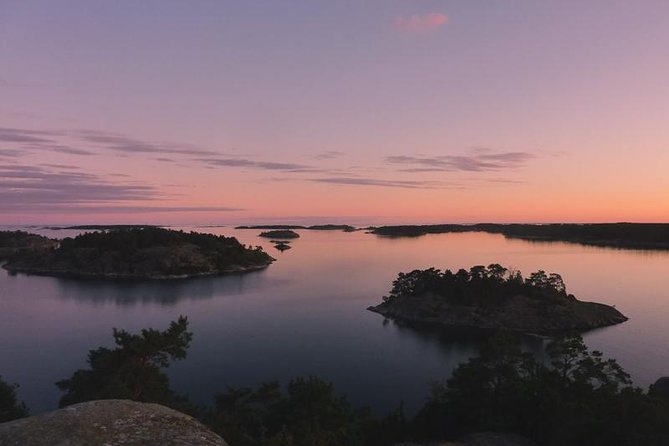
Saint Anna is a maze of islands off Sweden’s east coast, with sheltered waters close to shore and more exposed islands farther out. The scenery changes steadily as you paddle. Near the mainland, you pass forest, old wooden houses, grazing land, and sheltered bays. Farther out, the trees thin, the islands shrink, and the open sea takes over.
That variety gives the trip a clear rhythm. You are not paddling the same view for four days. One morning may bring pine trees and moss, while another takes you past bare rock, wind-shaped trees, and salt-resistant plants. Bird sanctuaries are part of the route, and sea eagles are a likely sight overhead. Seals are possible, though never guaranteed.
The old houses and cultivated areas in the inner archipelago add another layer. This is not untouched wilderness in every direction. It is a working cultural setting shaped by earlier island communities, fishing, farming, and seasonal life. You see traces of that past in the wooden homes, meadows, grazing animals, and plants that once formed part of island living.
More Kayaking Island Trips in Sweden:
- 1-Day Small-Group Stockholm Archipelago Kayak Tour
★ 5.0 · 266 reviews - Stockholm: Archipelago Islands Kayak Tour and Outdoor Picnic
★ 4.9 · 227 reviews - Stockholm Archipelago Tour by Kayak
★ 5.0 · 99 reviews
Day 1: Forested islands, sea meadows, and your first campfire
Pickup is at 10 a.m. in Norrköping, either at the train station or your chosen hotel or hostel. The company recommends arriving the night before. That is sensible, since Stockholm Skavsta Airport is about 55 minutes away by shuttle, while Stockholm Arlanda requires roughly two hours by direct train. Linköping City Airport is another option, with a short train connection to Norrköping.
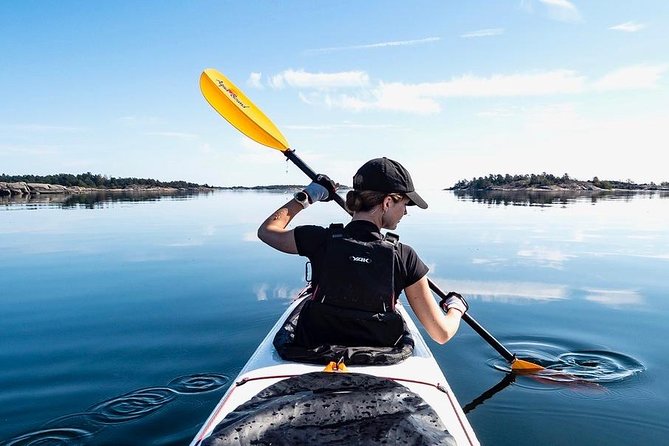
The opening paddle takes place in the inner archipelago. Large, forested islands surround the route, and traditional wooden houses sit along the bays. It is a gentle introduction to the region’s character, though the exact effort depends on weather and the group’s pace.
A lunch stop beside a sea meadow gives the first day its special flavor. Salt-tolerant plants grow at the water’s edge, and the guide introduces you to edible greens, rose hips, hawthorn, and barberries. These are not decorative details. They become part of your understanding of how island food can come from the immediate surroundings.
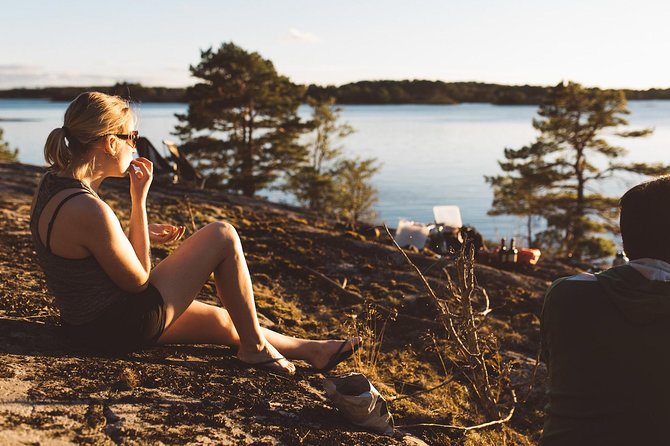
You continue through a maze of islands before reaching the camp in the late afternoon. The setup is on an uninhabited island, with tents, sleeping pads, and a carefully arranged outdoor kitchen. One group found the camp especially memorable because the team had built a table from birch branches. That small detail says a lot about the tone: practical, creative, and attentive without pretending you are at a resort.
The first evening is shared work. You help prepare dinner and make ingredients for later meals. Sorrel, orpine, chives, and juniper berries may be gathered for use in the cooking. Chef Helena leads the food side, while the kayaking guide handles equipment, safety, and route planning. You are not expected to be a trained cook, but you should enjoy taking part rather than waiting for a plate to appear.
Day 2: Bird sanctuaries and a more comfortable base camp
The second morning begins at the water’s edge. If the sea is calm, a morning swim is an appealing way to wake up, though it is entirely optional. Breakfast is included, and then you set out through the middle archipelago.
This part of Saint Anna has smaller, more numerous islands. Bird sanctuaries give you a reason to slow down and watch the sky. Sea eagles may glide above the route, and seals can sometimes be spotted. Wildlife sightings depend on weather, season, and luck, so you should treat them as a bonus rather than a promise.
The day’s destination is a different type of island habitat. Instead of pine trees and moss, you find deciduous forest, open glades, and grazing animals. The change matters because it also changes the available ingredients. Mushrooms, berries, and meadow herbs become the focus, with oregano and ground-ivy gathered for dinner.
The base-camp arrangement is one of the trip’s smartest features. You can make an exploratory paddle without breaking down every item in camp each morning. That saves energy and gives the four days a calmer feel. You still help with camp tasks, but your time is not swallowed by constant packing.
The food deserves serious emphasis here. One group learned how to make jam and pickles from harvested plants, while another was impressed that the meals remained ambitious even when rain made outdoor cooking difficult. Helena’s camp kitchen is not just a place to boil pasta. The aim is to teach you how ingredients, fire, timing, and teamwork can produce something special with limited equipment.
Day 3: The outer islands and a fisherman’s feast
Weather controls the third day. If conditions allow, you head toward the outer archipelago, where the sheltered wooded islands give way to hundreds of tiny, barren rocks. Sparse wind-pined trees cling to the islands, and salt-resistant plants occupy the gaps between stone and sea.
This is the most exposed and physically demanding section of the trip. The route has fewer places to hide from wind, and the paddle can be strenuous. Even if you are new to kayaking, you should be honest about your fitness and comfort on open water before booking. The tour welcomes beginners, but that does not mean every section feels easy.
The reward is solitude and a wide horizon. The outer islands have a spare beauty that is quite different from the inner archipelago. You get fewer houses, fewer trees, and a stronger sense of being at the edge of the Baltic Sea. The scenery is simple rather than busy, and that simplicity is part of its appeal.
By late afternoon, you return to camp. A local fisherman arrives with the catch of the day, creating the centerpiece for the final evening meal. The group is invited to share the feast with the wider Do the North crew, giving the night a more social feel than the earlier camp dinners.
This final meal brings together the main themes of the trip: local food, island life, practical cooking, and shared effort. You have spent the previous days collecting small ingredients and learning outdoor techniques. Now you see how a locally sourced catch can become a proper celebration, even with a campfire as the kitchen.
More Island Hopping Tours in Sweden:
- Stockholm: City Archipelago Sightseeing Cruise with Guide
★ 4.3 · 10,798 reviews - Stockholm: Archipelago Boat Tour
★ 4.4 · 3,110 reviews - Stockholm Archipelago Cruise with Guide
★ 4.0 · 1,125 reviews - Gothenburg: Archipelago cruise with guide
★ 4.3 · 1,002 reviews
Day 4: A quiet finish through canals and bird country
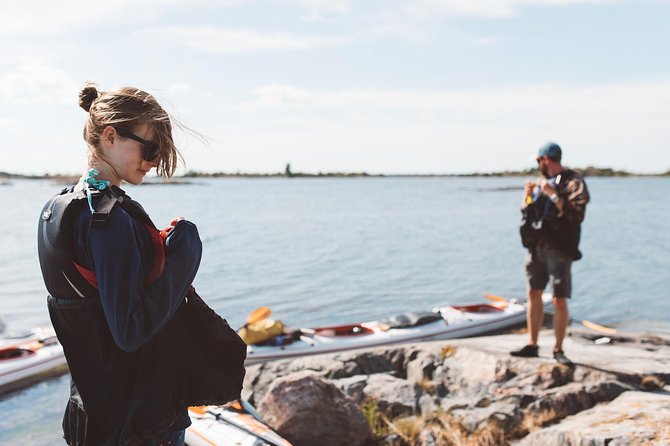
The last morning starts with breakfast and camp packing. You then paddle toward a different mainland landing point, passing more bird sanctuaries along the way. This route gives you fresh scenery rather than sending you back through the same waters.
A narrow canal eventually carries you out of the island maze. The change from wilderness to settled life happens quickly. Cabins and old houses appear around a bay, and the trip ends at Tyrislöts Sommarlanthandel after about 12 hours for the final day’s activities.
The ending has a satisfying shape. You begin among old homes and forested islands, spend several days in camp, reach the exposed outer rocks, and return through a canal into a settled bay. You leave with more than photographs. You have practiced paddling, learned about edible plants, and cooked meals in conditions that require cooperation.
The food: the strongest reason to choose this tour
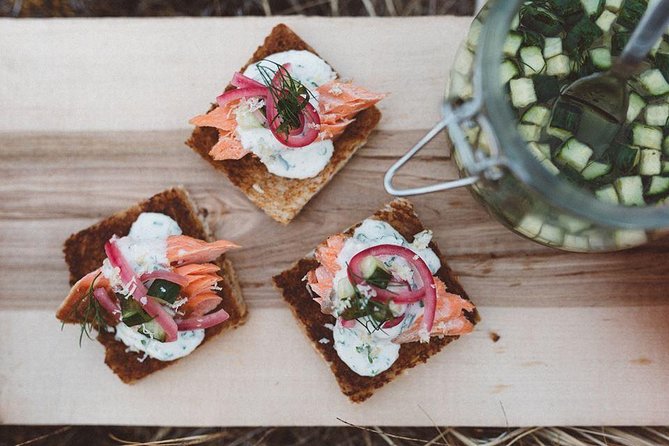
Many active trips treat meals as fuel. This one makes food the main event. Helena’s cooking, combined with foraging and local ingredients, gives the adventure its identity.
You may work with sorrel, orpine, chives, juniper, oregano, ground-ivy, berries, and other plants found along the route. The exact ingredients depend on season and availability, but the point is to connect the meal to the place. You are not simply eating beside the sea. You are learning how the sea meadows, forests, and island gardens can contribute to dinner.
The meals included are three breakfasts, three lunches, and three dinners, along with coffee or tea and alcoholic beverages. The food has been praised for being impressive enough to seem more suited to a proper kitchen than a campsite. That is important when judging the price. You are paying for guiding and equipment, but also for a culinary program that requires preparation, ingredients, and skill.
There is a catch. You need to participate. If your ideal holiday means sitting back while someone else cooks every meal, this is not the right fit. The best experience comes when you help gather ingredients, prepare food, arrange camp, and share the work.
Camping, equipment, and the level of comfort
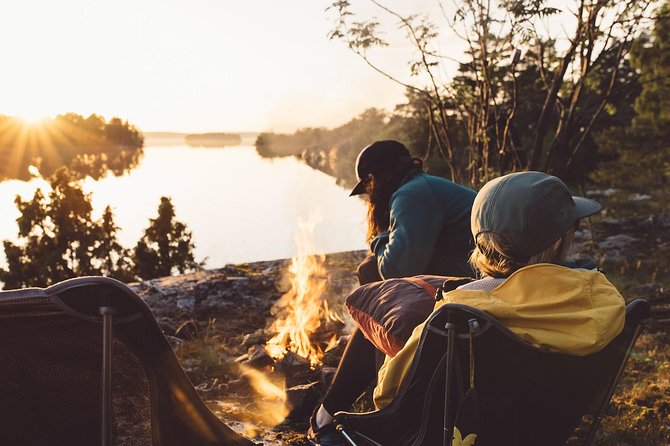
Camping is on uninhabited islands, but the setup is not described as rough or improvised. Past groups used good tents and comfortable sleeping pads, and the equipment was considered top quality. The birch-built table and organized camp kitchen add a pleasant sense of care.
Still, you should pack for real outdoor conditions. One participant needed warmer clothing than expected, and another group dealt with heavy rain for about 36 hours. The food and camp systems continued to work, but wet weather changes the character of any kayaking holiday. Bring layers and reliable rain protection, even if the forecast looks kind.
The trip also involves loading, unloading, and helping with camp. That is part of the experience rather than an unpleasant extra, but it adds effort to each day. You should be comfortable with a basic outdoor routine and sleeping in a tent.
Safety support is another strength. When one participant hurt a wrist after slipping, guide Tomas made a birch splint. The team later arranged a water taxi so that person could leave while the rest of the group paddled back. That does not remove the need for care, but it shows that the guides can respond sensibly when plans change.
Guides, group size, and the social side
The maximum group size is eight, which suits this kind of trip. A smaller group makes kayak instruction easier, keeps meal preparation manageable, and reduces the feeling of being part of a moving crowd.
Tomas or Thomas handles wilderness and kayaking duties, while Helena leads the culinary side. The exact guide lineup may vary, but the setup is clear: you get both practical paddling support and serious food instruction. Rob has also served as a kayaking guide and chef, helping with equipment and camp cooking.
The social side matters because you spend four days sharing food, tents, paddling, and chores. This is a good choice if you enjoy meeting a small group and pitching in. It may feel less comfortable if you prefer privacy or a fixed daily schedule.
Price and what the $1,954.27 package covers
At $1,954.27 per person, this is a costly short break. The value depends on how much you would otherwise spend arranging the same pieces yourself.
The price includes a driver or guide, a local guide, hotel pickup and drop-off, private round-trip transfers, kayaking support, camping equipment, three breakfasts, three lunches, three dinners, coffee or tea, and alcoholic beverages. It also includes the food planning, camp kitchen, instruction, route knowledge, and access to remote islands that would be difficult to manage alone.
Flights and airport transfers are not included. You should also budget for a night in Norrköping before pickup, since the start time is 10 a.m. That extra night is not a burden. Norrköping is a pleasant base with restaurants and waterways, and arriving early reduces the risk of missing the group.
For someone seeking a standard kayak rental, the price will seem high. For someone wanting a guided wilderness trip with a serious culinary program, private transfers, meals, equipment, and a tiny group, the figure is easier to justify. The key question is simple: do you value the cooking as much as the paddling? If yes, the package offers stronger value.
Who should book this four-day adventure?
I would recommend it to adults who enjoy food, nature, and practical activity in equal measure. You do not need advanced kayaking experience, but you should have a genuine interest in cooking and be willing to paddle for several hours, help around camp, and sleep outdoors.
It suits couples, friends, and solo guests who are comfortable joining a small group. It also works well for a family with adult children. The minimum age is 18, and the maximum listed weight is 120 kilograms.
You should think twice if you dislike unpredictable weather, shared chores, or open-water exertion. The outer archipelago can be strenuous, and the itinerary depends on conditions. You also should not book this expecting restaurant-style service at every meal. The pleasure comes from making something excellent with the tools and ingredients available.
Cancellation is flexible up to 24 hours before the start time for a full refund. Changes or cancellations made less than 24 hours before departure are not accepted for a refund.
FAQ
Where does the tour begin?
Pickup is at 10 a.m. in Norrköping, either at the train station or at a hotel or hostel of your choice.
How do I reach Norrköping?
Stockholm Skavsta Airport is about 55 minutes away by airport shuttle. Stockholm Arlanda Airport connects to Norrköping by direct train in about two hours. From Linköping City Airport, the train ride to Norrköping takes about 25 minutes.
Are kayaking beginners welcome?
Yes. Beginners can participate, but you should have a genuine interest in cooking and be prepared for an active outdoor trip.
How many people can join?
The maximum group size is eight people.
What meals are included?
The package includes three breakfasts, three lunches, and three dinners, plus coffee or tea and alcoholic beverages.
Is camping equipment provided?
Yes. Tents and sleeping pads are provided, along with the equipment needed for the kayaking and camp setup.
Should you book the Saint Anna culinary kayaking trip?
Book it if you want your outdoor adventure to revolve around food as much as scenery. The best parts are the small group, the changing island environments, the well-equipped camp, and Helena’s imaginative cooking with foraged and local ingredients.
Skip it if you want a hotel bed, a light paddle, or a holiday with no shared work. This is an active, weather-dependent trip with a high price tag. For the right person, though, it offers something rare: four days when every meal, island, and paddle stroke feels connected to the place.
Just added around Sweden
- Vaxholm & Stockholm Archipelago: Guided Excursion, Day Trip★ 4.8 · 41 reviews
- 6 Islands History Walking Tour in Karlskrona★ 5.0 · 4 reviews
- Guided 5-Day Kayak & Wildcamp the Archipelago of Sweden★ 5.0 · 73 reviews
- 4-Day Kayak & Wildcamp the Archipelago of Sweden – Self-guided★ 5.0 · 16 reviews
- 5-Day Kayak & Wildcamp the Archipelago of Sweden – Self-guided★ 5.0 · 48 reviews
- PRIVATE Sunset Kayaking in Stockholm Archipelago Nature Reserve★ 5.0 · 28 reviews
- Stockholm Archipelago Tour by Classic Wooden Boat with Guide★ 4.5 · 63 reviews
- 2-Day Small-Group Stockholm Archipelago Kayak Tour★ 5.0 · 25 reviews
Kayaking Island Trips, compared.
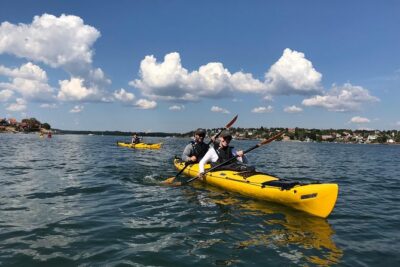
1-Day Small-Group Stockholm Archipelago Kayak Tour
Read our review →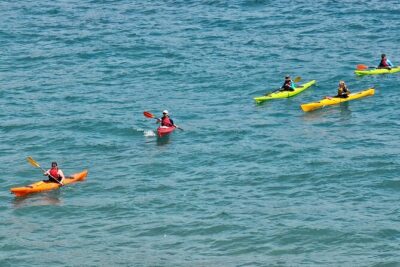
Elafiti Islands Sea kayaking: Full-Day Bike and Kayak tour on Lopud and Šipan
Read our review →Archipelago Islands Kayak Tour and Outdoor Picnic
Read our review →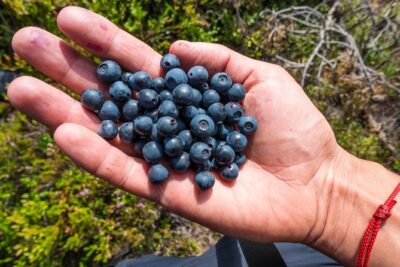
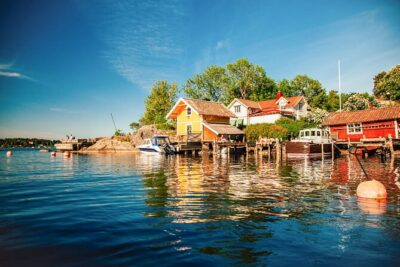
Kayaking tour around Vaxholm Archipelago with Fika
Read our review →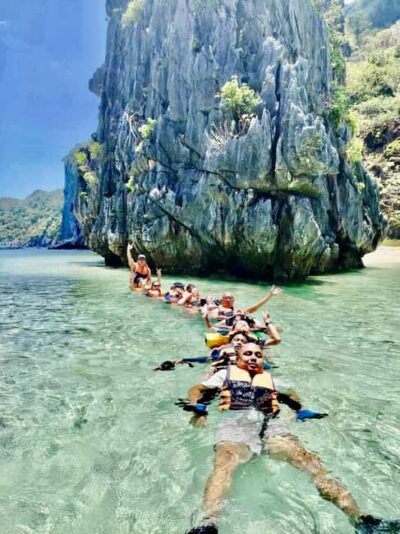
Island Hopping Tour A with Kayaking on Big Lagoon
Read our review →
4 Island Premium Yacht with Snorkeling & Clear Kayak
Read our review →
Browse the lists this tour appears in