
REVIEW · 1-DAY TOURS
Mumbai: A Symphony of Seven Islands – Get Local in One Day
Mumbai tells its story best on the move. This full-day experience links imperial landmarks, old Portuguese homes, crowded markets, local trains, iconic food, and an Arabian Sea sunset into one clear narrative. I like the way the city itself becomes the subject, rather than just a backdrop for famous sights. I also like the mix of transport, which gives you a real feel for how Mumbaikars get around.
The main consideration is pace. You will walk a lot, change vehicles several times, and spend much of the day outdoors. Chor Bazaar, local trains, and narrow old lanes may feel rough around the edges, but that is part of the point. This is not a polished sightseeing loop. It is a busy, thoughtful introduction to Mumbai as a living city.
Key points at a glance
- Four-part story: The day follows Mumbai from its colonial port beginnings to its modern high-rise city life.
- Local transport included: You use trains, a bus, an auto-rickshaw, and walking routes, with taxi fares paid separately.
- Strong food stops: Pav bhaji and vada pav are included, while traditional sweets are optional.
- Excellent guide-led format: Shrijit is praised for clear storytelling, historical detail, good timing, and a friendly manner.
- A mix of famous and less-seen Mumbai: Gateway of India, CST, Marine Drive, Dhobi Ghat, Colaba, and quieter old neighborhoods all fit into one day.
- Best for active visitors: Comfortable shoes, cash, and patience with crowds will make the day much easier.
Why this one-day Mumbai tour works
Many city tours simply connect one famous building to the next. This experience tries something more ambitious. It treats Mumbai as a four-scene film, with each area showing a different stage in the city’s development.
The story begins with imperial Bombay, moves through the Portuguese-influenced quarter once known as Bom Bahia, enters the rougher commercial center called Bombay Black, and ends with Aamchi Mumbai, or our Mumbai. The structure gives the day a useful shape. You are not only collecting sights. You are seeing how geography, trade, migration, colonial rule, transport, and daily work shaped the city.
I especially like this approach for a first visit. Mumbai can feel enormous and hard to read. This route gives you a framework, so Gateway of India, CST, Chor Bazaar, Dhobi Ghat, and Shivaji Park feel connected rather than random.
The tour costs $34 per person. That is a fair price for a full-day experience that includes a local guide, bottled water, train fare, auto fare, vada pav, and pav bhaji. Taxi fares are extra, with the total expected to remain under Rs. 150, though you should carry at least Rs. 300 in cash. For the amount of ground covered and the transport used, the value is good.
More One-Day Trips in the world:
- Krabi: Premium 4-Island Day Trip by Longtail Boat with Lunch
★ 4.5 · 4,812 reviews - Krabi: Hong Islands Day Trip by Speedboat with Lunch
★ 4.5 · 3,952 reviews - Sardinia: La Maddalena Archipelago Full-Day Trip by Boat
★ 4.6 · 2,710 reviews
Scene One: Gateway of India to Marine Drive
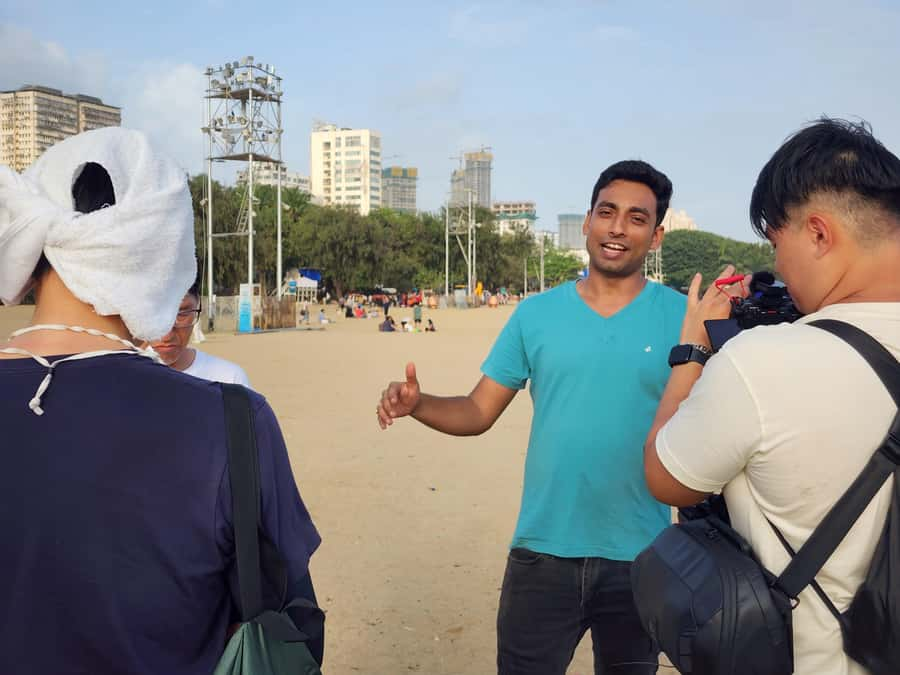
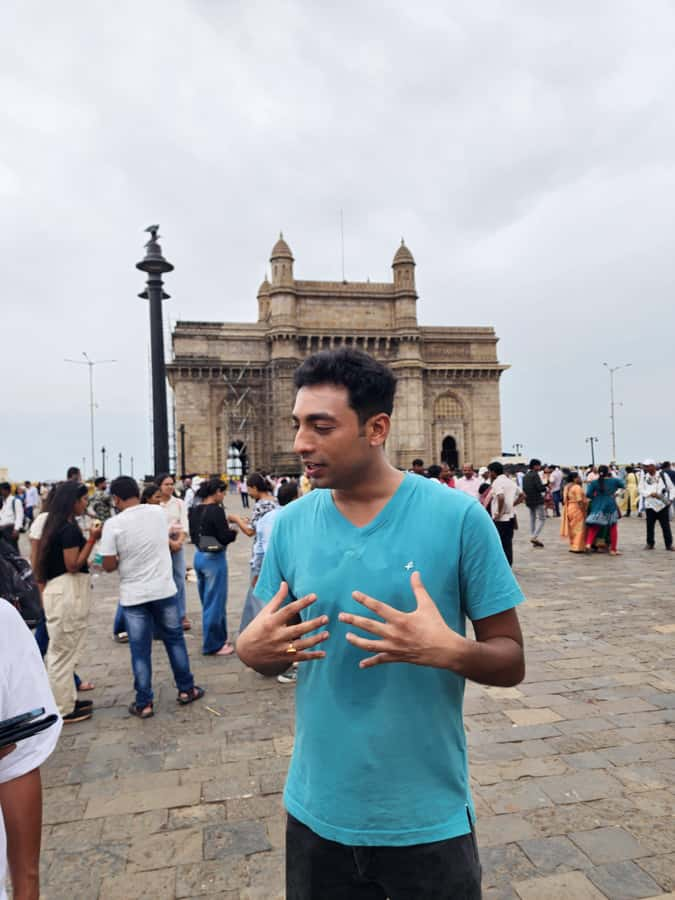
The day opens at the Gateway of India, the natural starting point for Mumbai’s story. This waterfront monument points to the city’s role as a major port and to the British imperial period that shaped much of South Mumbai.
From here, you walk through Colaba. The area combines colonial buildings, shopping streets, hotels, food stalls, and ordinary city traffic. It can be busy, but the walking route lets you notice details that disappear when you stay inside a vehicle.
The route continues to St. Thomas Church, Mumbai’s oldest Anglican church. Its age gives you a useful reminder that the city’s European history is not limited to grand government buildings. Religious institutions, trading companies, financial offices, and port activity all helped form this part of town.
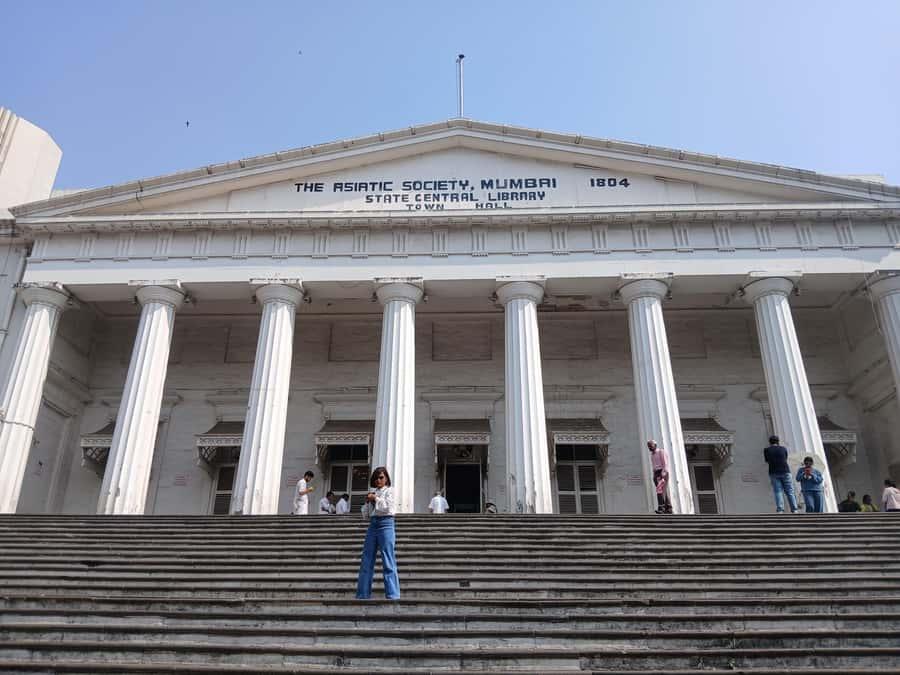
You then pass several major landmarks: the Bombay Stock Exchange, Flora Fountain, Bombay University, and the High Court. These places help explain Mumbai as a center of commerce, law, education, and administration. You do not need to be an architecture specialist to appreciate the changes in style. The buildings show how the city shifted from colonial headquarters to a modern Indian financial center.
Marine Drive brings a change of mood. The open curve of the waterfront gives you space after the close streets of Colaba and the historic center. The buildings around it also fit the day’s theme, showing how Mumbai’s architecture moved through different periods.
This part involves substantial walking. Comfortable shoes are not a suggestion to ignore. The route is far more enjoyable when you can pay attention to the guide instead of thinking about sore feet.
A bus ride to CST and Mumbai comfort food
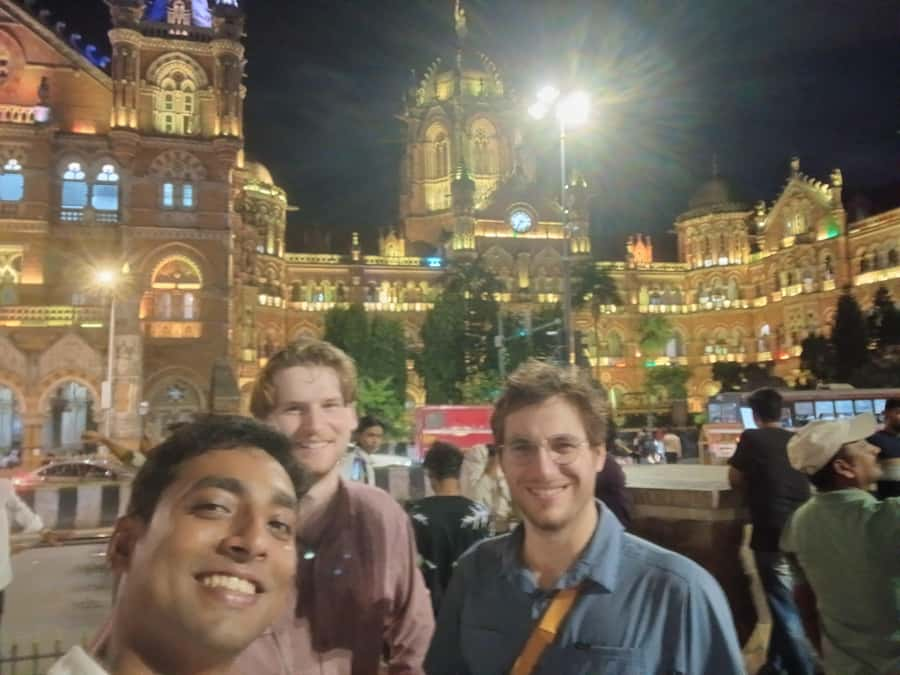
A local bus carries you toward Chhatrapati Shivaji Maharaj Terminus, usually called CST. The ride is part of the lesson. You are not being moved between attractions in a private bubble. You get a small taste of the city’s regular transport system.
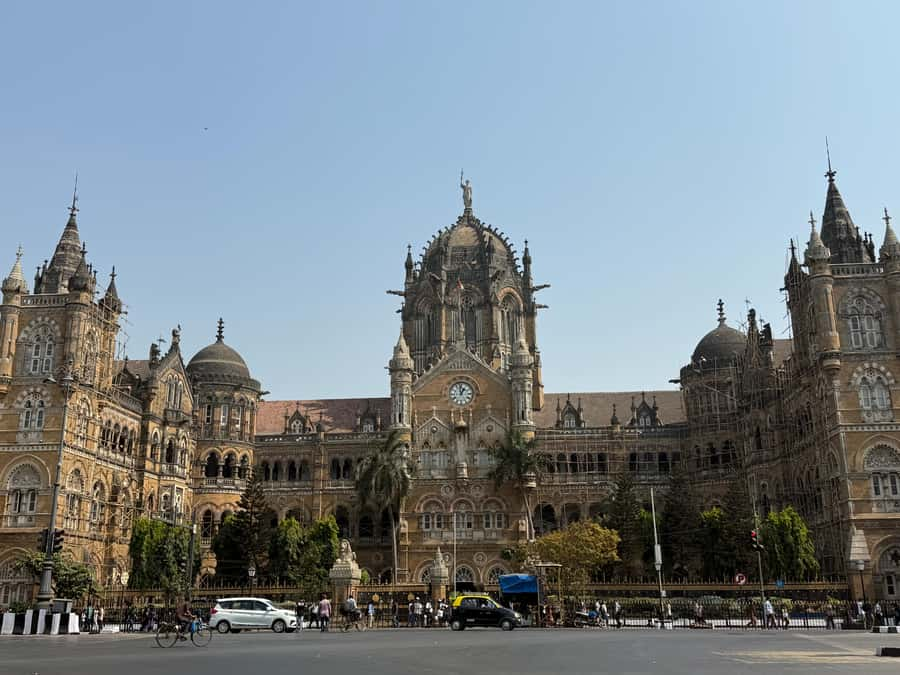
CST is one of Mumbai’s great architectural sights and a UNESCO World Heritage Site. Its design combines Victorian Gothic features with Indian details, making it one of the clearest symbols of colonial-era Bombay. It is also a working railway station, not a museum piece, so the setting has real movement and noise.
Food enters the story here with pav bhaji, one of Mumbai’s best-known street foods. The dish combines a spiced vegetable mash with buttered bread rolls. It is filling, informal, and closely tied to the city’s street-food culture. Vada pav is also included during the day, giving you another classic Mumbai snack: a fried potato patty in a soft bun with chutneys and spices.
The food is more than a quick lunch. These dishes help connect the grand buildings to ordinary city life. You get the monuments, but you also taste the food that keeps people moving through the workday.
Scene Two: A train into Bom Bahia
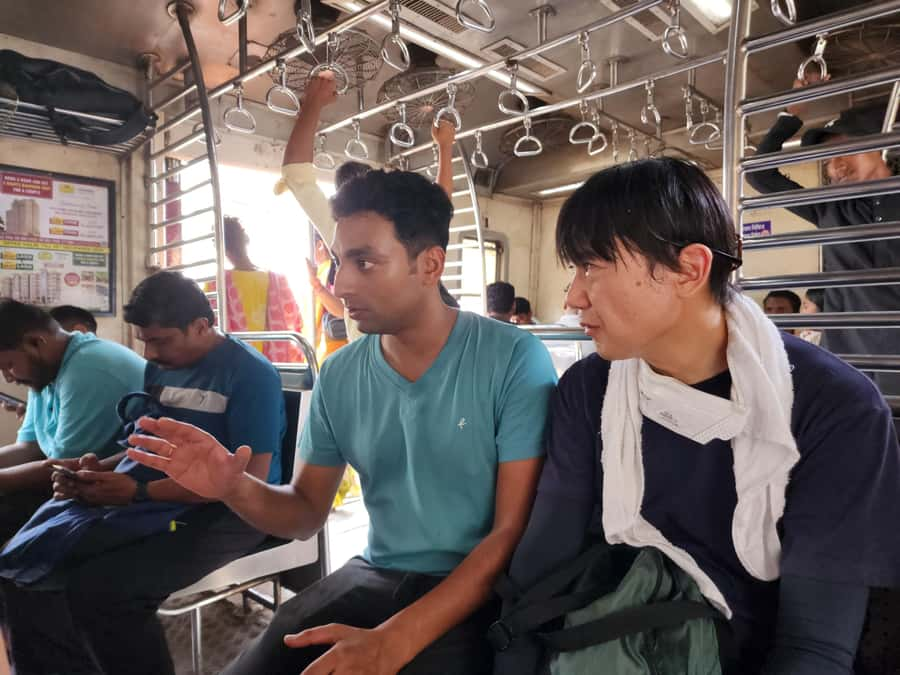
From CST, you board a local train. The change from walking and bus travel to the railway is important because Mumbai’s trains are central to the city’s daily rhythm. The ride also shifts the story back toward an older, quieter part of the city.
The destination is an Indo-Latin quarter with Portuguese influence. Narrow lanes and roughly 200-year-old homes feature sloping roofs and arched windows. The architecture may remind you of Goa, even though you are still in Mumbai.
This is one of the most distinctive parts of the day. High-rise buildings and major roads are not far away, yet the old homes create a very different sense of place. You might find the contrast more memorable than another grand monument. Mumbai’s past survives here in domestic architecture, not only in official buildings.
A hilltop garden offers views toward the docks. That viewpoint gives the Portuguese name Bom Bahia, meaning Good Bay, more meaning. Mumbai’s position on the coast made it a meeting point for ships, trade, goods, ideas, and competing empires.
The train ride and the old neighborhood also make this scene feel less packaged than a standard sightseeing stop. At the same time, local trains can be crowded and fast-moving. You should be prepared to follow the guide closely and keep your belongings secure.
More Island Hopping Tours in the world:
- Santorini: Volcanic Islands Cruise with Hot Springs Visit
★ 4.4 · 10,869 reviews - Stockholm: City Archipelago Sightseeing Cruise with Guide
★ 4.3 · 10,798 reviews - Full-Day Dubrovnik Elaphite Islands Cruise with Lunch and Drinks
★ 5.0 · 8,823 reviews - Blue cave, Mamma Mia and Hvar, 5 islands speedboat tour
★ 5.0 · 7,150 reviews
Scene Three: Chor Bazaar and Bombay Black
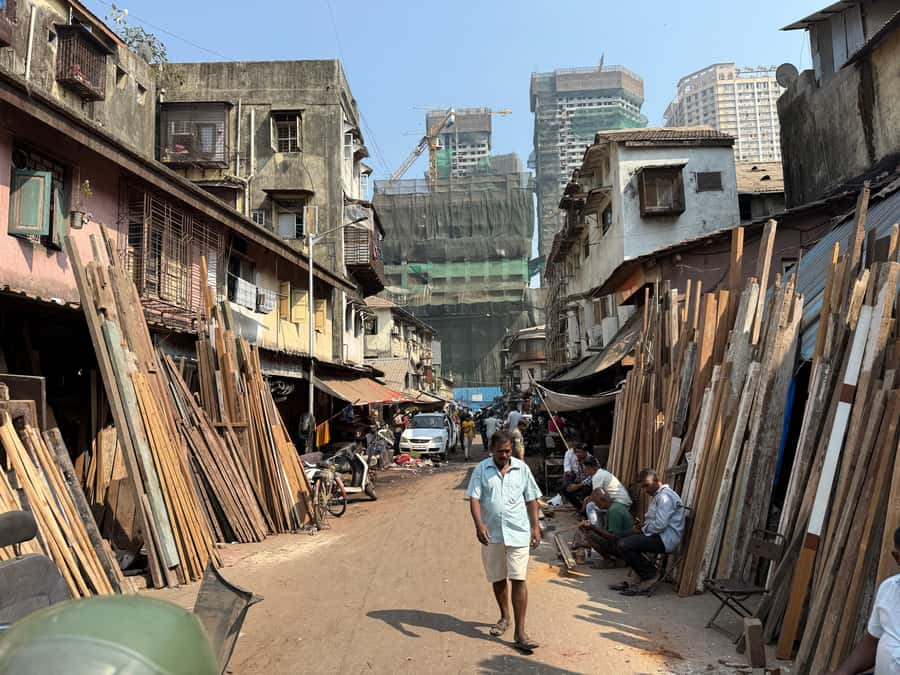
A taxi takes you into the area described as Black Town in Shantaram. The name refers to the older division between European and Indian parts of colonial Bombay. Here, the focus shifts away from imperial facades and toward commerce, work, street life, and the city’s less polished side.
Chor Bazaar is the key stop. Its name is often translated as Thieves’ Market, and the area is known for antiques and secondhand goods. You may find old objects, furniture, decorative pieces, and items with uncertain stories. The appeal is not simply shopping. It is the chance to see a working market with its own character.
You should keep expectations sensible. This is not a quiet antiques gallery, and it may feel chaotic. If you enjoy browsing, bargaining, and looking at objects that carry traces of Mumbai’s past, you will probably like it. If you prefer carefully arranged attractions, this stop may test your patience.
The route also takes you through the economic heart of Mumbai. That phrase matters because the area shows the city as a place of constant exchange. Money, goods, labor, food, transport, and housing all press together here. The experience is more direct than a polished heritage walk.
There may be time for a stop at a century-old sweet shop. Desserts are not included, so carry cash if you want to try one. This is a nice optional addition, especially if you have already enjoyed the savory snacks and want a taste of Mumbai’s traditional sweets.
Another train station follows. By this point, you will have walked, taken a bus, used a taxi, and visited a market. The changing transport is one of the strongest parts of the tour, though it also means the day is active and subject to Mumbai traffic.
Scene Four: Dhobi Ghat and Aamchi Mumbai
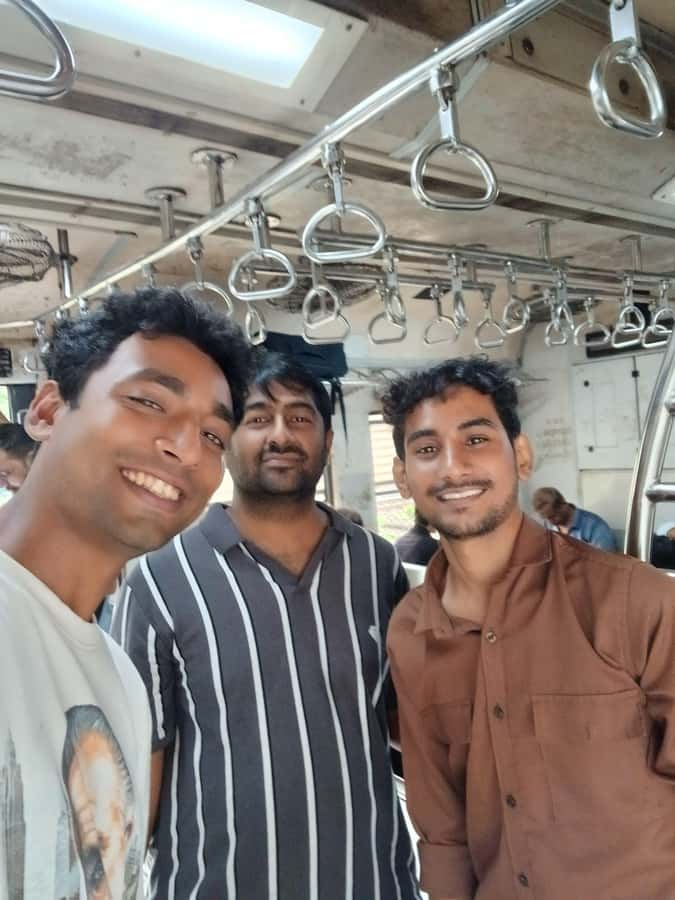
The final scene begins with another train ride into the modern city. Here, high-rise buildings create a very different picture from the old homes of Bom Bahia and the colonial center of South Mumbai.
From above, you see Dhobi Ghat, the famous open-air laundry. The view shows the scale of Mumbai’s daily work. Laundry is sorted, washed, dried, and returned through an organized system that has become one of the city’s most recognizable sights.
The bird’s-eye view is useful because Dhobi Ghat can be hard to understand from street level. From above, the rows and work areas make more sense. You see not just a photo opportunity, but a place connected to the city’s everyday economy.
A bus then carries you toward Shivaji Park, an important cultural and public space. The area is linked with Mumbai’s civic life and gives the final part of the route a more local tone. From there, a peaceful walk leads to a nearby beach.
The day ends by the Arabian Sea, ideally with the sun going down over the water. This closing scene brings the route back to Mumbai’s coastal identity. After the crowded streets, old neighborhoods, markets, trains, and towers, the open waterfront gives you time to absorb what you have seen.
The ending is well chosen. Mumbai began as islands and a port, and the sea remains part of its character even as the city grows upward and outward.
Transport, walking, and practical comfort
The tour uses several types of local transport: train, bus, taxi, auto-rickshaw, and plenty of walking. Auto fare and train fare are included. Taxi fare is not, because it varies with traffic and demand.
Carry cash. The expected taxi cost should not exceed Rs. 150, but the practical advice is to bring at least Rs. 300. You will also want cash for optional sweets and any small purchases at Chor Bazaar.
Wear comfortable clothes and sturdy walking shoes. Bring hand sanitizer or tissues, since you will be moving between public transport, food stops, markets, and outdoor areas. One bottled water is included, but you may prefer to carry extra water for a full day out.
The tour is offered in English. It is not suitable for wheelchair users, babies under one year, or people over 95 years. The transport changes and walking routes make that limitation important to consider before booking.
The guide and the storytelling
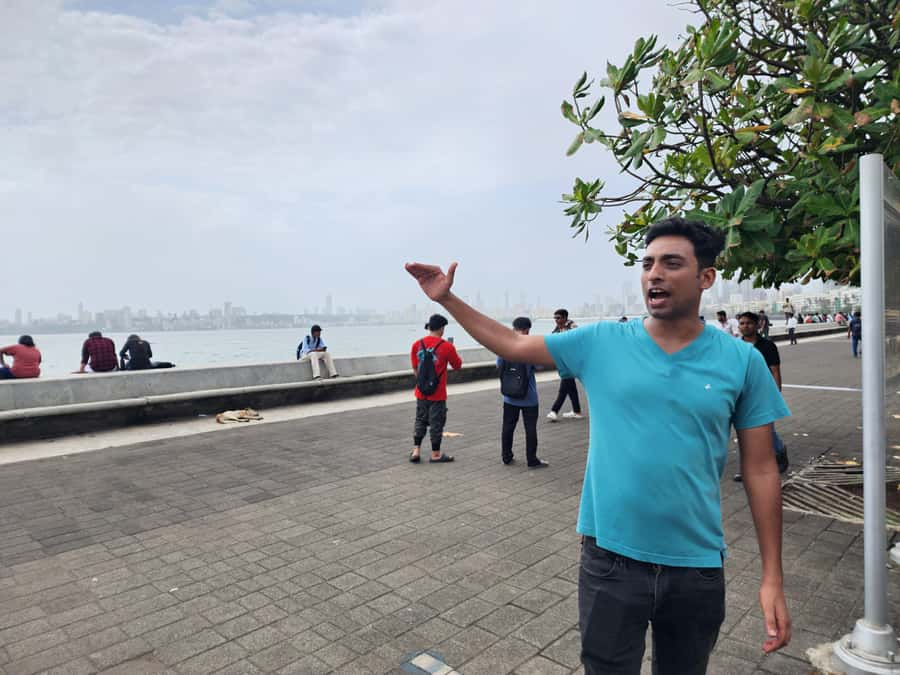
The guide is central to the experience. Shrijit receives especially strong praise for building the narrative slowly through the day, explaining historical details in a factual way, and keeping the mood friendly and relaxed.
That combination matters. Mumbai can overwhelm you with noise, traffic, buildings, and people. A good guide helps you notice why a street, church, station, market, or neighborhood matters without turning every stop into a lecture.
The day also benefits from a guide who can manage movement. The route includes several forms of transport, and timing matters in Mumbai. Feedback about being on time and well organized is encouraging, especially for a tour that covers so much ground.
Still, the tour’s success depends partly on your interests. If you want long visits inside museums or quiet time at each landmark, this may feel too quick. If you want a broad, street-level understanding of Mumbai in one day, the format makes sense.
Who should book this Mumbai experience?
I would recommend it to first-time visitors who want more than a checklist of monuments. It suits you if you enjoy walking, public transport, local food, and historical stories that connect separate parts of a city.
It is also a good match for visitors with only one free day in Mumbai. You will not see every district, but you will cover a strong range of the city’s character, from Colaba and CST to the Portuguese-influenced quarter, Chor Bazaar, Dhobi Ghat, Shivaji Park, and the coast.
You may want another option if you dislike crowds, train travel, or uncertain traffic. The day is not luxurious, and the route can feel busy. It also offers little time for independent shopping or extended photography stops.
The cancellation policy is practical: you can cancel up to 24 hours ahead for a full refund. You can also reserve now and pay later, which helps if your Indian itinerary is still shifting.
Should you book it?
Book this tour if you want Mumbai explained through movement, food, architecture, and daily life. At $34, the included transport, snacks, guide, and full-day route make it a strong value.
Skip it if you want a slow, private, attraction-by-attraction tour. For everyone else, especially active first-time visitors, this is a smart way to get a clear sense of Mumbai in one day. Bring cash, wear good shoes, and let the city’s changing scenes do the storytelling.
FAQ
How much does the Mumbai tour cost?
The price is $34 per person.
What is included in the price?
The tour includes an expert local guide, one bottled water, auto fare, train fare, vada pav, and pav bhaji.
Are taxi fares included?
No. Taxi fares are paid separately because they use dynamic pricing. The expected total should not exceed Rs. 150, but you should carry at least Rs. 300.
What food is included?
Vada pav and pav bhaji are included. Desserts from an optional century-old sweet shop are not included.
What transport does the tour use?
You use local trains, a bus, a taxi, an auto-rickshaw, and walking routes during the day.
Is the tour offered in English?
Yes. The listed tour language is English.
What should I bring?
Bring comfortable shoes, comfortable clothes, cash, and hand sanitizer or tissues. Cash is especially useful for taxi fares, desserts, and possible purchases.
Is the tour suitable for wheelchair users?
No. The experience is not suitable for wheelchair users.
Is the tour suitable for babies under one year?
No. The experience is not suitable for babies under one year.
Can I cancel the tour for a refund?
Yes. You can cancel up to 24 hours in advance for a full refund.
Just added around the world
- Zakynthos Premium 4×4 Island Experience★ 4.4 · 7 reviews
- Zanzibar: Luxury Speedboat Island Hopping Tour★ 5.0 · 2 reviews
- Zadar: Three Islands Private Boat Tour★ 5.0 · 80 reviews
- Zadar: Island-Hopping, Swimming & Snorkeling SpeedBoat Tour★ 5.0 · 33 reviews
- Zadar:Speedboat Tour with Snorkeling on 3 islands★ 5.0 · 3 reviews
- Zadar: Private Sunset Sailing Tour in Zadar Archipelago★ 5.0 · 26 reviews
- ★ Zadar: SpeedBoat Tour to 3 Islands – Swimming & Snorkeling★ 4.8 · 40 reviews
- Zadar: Island-Hopping Blue Lagoon Boat Tour with Drink★ 4.9 · 148 reviews
1-Day Tours, compared.

Premium 4-Island Day Trip by Longtail Boat with Lunch
Read our review →
Hong Islands Day Trip by Speedboat with Lunch
Read our review →
La Maddalena Archipelago Full-Day Trip by Boat
Read our review →
4 Islands Day Trip by Speedboat Including Lunch Box
Read our review →
Phi Phi Islands Speedboat Day Trip from Phuket with Lunch
Read our review →
From Phuket or Khaolak : Similan Islands Day Trip
Read our review →

Browse the lists this tour appears in